Bamboo has earned a strong position among sustainable textiles - and unlike a lot of materials that ride on eco-friendly branding, it actually deserves it. With some caveats, as always.
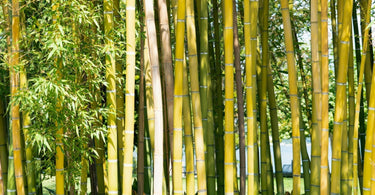
The plant holds the Guinness World Record for the fastest-growing plant on Earth, certain species of bamboo can grow around 3 feet (91 cm) in a single day under optimal conditions. No irrigation to thrive in most climates, no agricultural waste, and it regenerates from its own root system without replanting.
In a word - worth the hype. It's one of the few raw materials where the source story is actually as good as the marketing suggests.
But here's the thing that rarely gets mentioned: bamboo, the plant, and bamboo, the fabric, are not the same thing. Sounds obvious, but needs to be said.
What happens between the field and finished fibre determines almost everything about whether a bamboo product is genuinely worth buying and sustainable or not.
Let’s take a closer look at how bamboo fabric is actually made, what the five main types look like in practice, and what to look for when buying.
Bamboo Fabric Type Overview
The table below covers the five main types across the factors that actually matter for a towel: how it's made, how it feels, how it holds up, whether it's genuinely sustainable, and whether the natural properties bamboo is famous for survive the manufacturing process. Because that makes the real difference.
|
|
Viscose / Rayon |
Modal |
Lyocell |
Bamboo Linen |
Bamboo-Cotton Blend |
|
Process |
Often chemical-intensive; environmental impact can vary significantly by facility |
Refined viscose; better closed-loop at quality facilities |
Closed-loop; 99%+ solvent recycled |
Mechanical only; no chemicals |
Depends on the bamboo component; certification closes the gap |
|
Softness |
High |
Very high |
High |
Low – coarse |
Very high |
|
Durability |
Moderate |
Good |
Good |
High – but often stiff |
Excellent – cotton structure prevents degradation over time |
|
Sustainability |
Poor–moderate |
Moderate |
Strong |
Excellent |
Excellent – with biodegradable fibres, certified production |
|
Best for |
Budget clothing |
Mid-range soft goods |
Premium textiles |
Industrial use |
Towels and high-use home textiles |
From Plant to Fibre – How Manufacturing Process Affects Everything
Bamboo stalks are almost entirely cellulose - the same structural compound found in cotton and linen. Turning that cellulose into a wearable fibre requires breaking it down and putting it back together, and there are several ways to do that.

Some are clean. Some are far from it.
The manufacturing route shapes the fabric's performance, its environmental footprint, and whether any of bamboo's natural properties survive into the finished product.
A towel marketed as "bamboo" could be anything from a genuinely low-impact textile to a conventionally processed synthetic - and the label alone typically won't tell you which.
The Five Main Types of Bamboo Fabric
1. Bamboo Viscose / Rayon
The most common bamboo fabric on the market, and by a significant margin. Viscose (also sold as rayon) is produced by dissolving bamboo pulp in a chemical solvent - typically sodium hydroxide and carbon disulphide – to create a liquid that is then extruded through fine holes and hardened into fibres.
The resulting fabric is soft, drapey, and pleasant against the skin. It's also the type most often sold under vague "bamboo" labelling without further explanation.
The sustainability picture is more complicated. The solvents used are largely toxic; in less regulated facilities, they're released directly into wastewater. On top of that, the chemical processing largely destroys bamboo's natural antibacterial properties. That "antibacterial bamboo" claim on your towel? If it's viscose, it may not exactly hold up after washing.
2. Bamboo Modal
Modal is a refined form of viscose, produced using a similar but more controlled process that yields a finer, more consistent fibre. It uses less chemical input than standard viscose, and the closed-loop production methods used by the most reputable manufacturers (notably Lenzing, the Austrian fibre company whose TENCEL™ Modal is the benchmark) recover and reuse most of the solvent.
Bamboo modal is exceptionally soft - softer and more drapey than standard viscose – and holds its shape better over repeated washing. It breathes well and has a light, silky feel.
The sustainability position sits somewhere between viscose and lyocell. Better than unregulated viscose; not as clean as the best lyocell. Certification from the producer (look for FSC-certified fibre sourcing) is the main separator here.
3. Bamboo Lyocell
Lyocell – best known under the TENCEL™ brand - is made using a closed-loop solvent process in which more than 99% of the chemical solvent is captured and recycled. Water use is also significantly lower than in viscose production. The Textile Exchange's Preferred Fiber & Materials Market Report consistently identifies lyocell as one of the most environmentally sound regenerated fibres available.
The fabric is strong, slightly more structured than modal, and holds its performance properties over time. It also retains more of bamboo's natural characteristics than viscose does, because the gentler process doesn't strip the fibre to the same degree.
Bamboo lyocell is the cleanest version of regenerated bamboo fabric, but it's also the least common and typically the most expensive. If you find it, look for OEKO-TEX or FSC certification to verify the supply chain.
4. Bamboo Linen
The most mechanically straightforward method: bamboo stalks are crushed, and the natural enzymes or gentle retting processes break down the plant matter, leaving the raw fibre to be spun. No big chemical processing.
The result? A coarse, textured, and durable material - closer to traditional linen in feel than anything else on this list. It's genuinely low-impact and retains bamboo's natural properties in full, including its antibacterial characteristics, because nothing has altered the fibre at a chemical level.
The trade-off is feel: it's not soft in the way bamboo viscose is soft, and it's not well-suited to towels or anything requiring absorbency and comfort against the skin.
It's more common for bags, upholstery, and industrial applications. Niche, honest, and worth knowing about, but not relevant to most bathroom decisions.
5. Bamboo-Cotton Blends
This is where it gets genuinely interesting and where a great deal of the best bamboo textile products actually sit.
Blending bamboo fibre (typically bamboo viscose or a similar regenerated cellulose) with quality cotton combines the properties of both: bamboo's natural softness, breathability, and antibacterial characteristics alongside cotton's structure, durability, and absorbency. The antibacterial properties of bamboo cotton towels, will help reduce odours, and is also beneficial for sensitive skin.
The cotton component helps the fabric hold its shape through repeated washing, which pure bamboo fabrics can struggle with at lower quality levels.
What about sustainability? A bamboo-cotton blend made with OEKO-TEX certified materials and quality manufacturing can outperform a "pure" bamboo product that's been heavily chemically processed, has had its natural properties stripped out, and carries no credible certification.
A Note on the "Pure Bamboo" Problem
It's worth stating clearly: the bamboo textile industry as a whole does have a greenwashing problem, and it runs in an… Unexpected direction, to say the least.
Products marketed as "100% bamboo" are often more heavily processed, carry weaker certification, and deliver fewer of bamboo's natural benefits than a well-constructed blend.
The FTC's guidance is useful here: unless a product is labelled as bamboo linen (mechanically processed), any "bamboo" fabric is a regenerated cellulose fibre - chemically produced, similar in process to other synthetic regenerated fibres. That's not automatically a problem, but it should be labelled (and understood) accurately.
What actually matters is the quality of the fibre inputs, the manufacturing process, the certification, and the construction of the finished product.
Our Bamboo-Cotton Towels
Our bamboo towels are made from a 65% cotton, 35% bamboo blend, produced in Portugal at a mill with over a century of textile history. The blend is certified to OEKO-TEX Standard 100 - meaning no harmful substances, verified at the finished product level.
The construction uses zero-twist technology, in which fibres are bound without the conventional twisting process. This creates a more open structure that is much softer and more absorbent than standard construction – and because the bamboo-cotton blend is inherently durable, the softness holds across repeated washing rather than degrading over time. A difference you’ll feel.

The result is a towel that sits at 580 GSM - substantial, absorbent, and comfortable – while staying breathable and relatively quick to dry. At that weight with that construction, these bamboo cotton towels offer genuinely different performance from either a standard cotton or a pure-bamboo alternative.
Quick Buyer's Guide to Bamboo Fabrics
Before buying any bamboo textile product, it's worth running through a few straightforward checks.
-
Read the label. "Bamboo" almost always means viscose or rayon. That's not automatically a dealbreaker - but any natural property claims should be treated with scepticism unless backed by certification.
-
Look for OEKO-TEX Standard 100. It tests the finished product for over 300 potentially harmful substances. When shopping for eco towels, it's the most reliable single indicator at the product level.
-
Check the GSM. Below 400 and you're looking at something that won't last. The 550–650 range is where durability and comfort converge, whether that's a bath towel or a striped beach towel.
-
For blends, the cotton matters as much as the bamboo. Combed long-staple cotton holds structure and softness through repeated washing. If the label doesn't specify, that's usually telling.
-
Pure bamboo & antibacterial claims. Those properties are well documented in raw bamboo fibre. Whether they survive heavy chemical processing - and persist after washing - is a different question entirely.
-
Construction and material are separate things. A ribbed towel dries faster because of how it's woven, not what it's made of. The best products get both right.
Bamboo & Sustainability
Bamboo is a remarkable material - and unlike most things marketed as sustainable, the plant genuinely earns that reputation.
What it becomes depends almost entirely on what happens next: who processes it, how, and whether anyone has verified the result.
And here's where it gets interesting - because buying better for the planet and buying better for yourself point in exactly the same direction. A well-made, certified bamboo product outlasts the cheap alternative and works better throughout its life. Everybody wins.
A little awareness is all it takes to tell the difference.
